
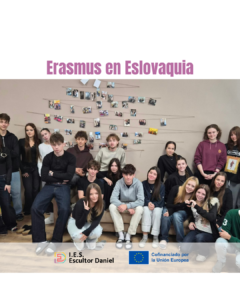
Nuestro diario Erasmus: tres semanas en Eslovaquia
Autores: Carla Victoriano, Ada Mayoral y Juan Llorente (1.º de Bachillerato).
Actividades individuales que hice con Tereza (CARLA)
3 de octubre
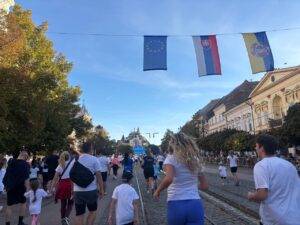
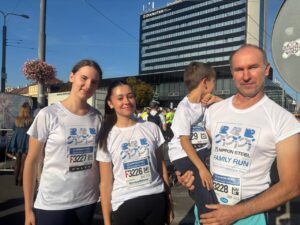
Mi primer sábado en Eslovaquia coincidió con una importante carrera que se celebraba en Košice, llamada la Maratón de la Paz. Esta carrera se organiza desde 1924 sin haber dejado de celebrarse ningún año.
Cuando me dijeron que íbamos a asistir, no me imaginaba la importancia que tenía este evento. Sin embargo, al llegar al lugar donde se celebraba, en pleno centro de la ciudad, me sorprendieron el buen ambiente que se respiraba y la gran cantidad de participantes que había. A lo largo de todo el recorrido se veía a muchísimas personas animando a los corredores y a cientos de familias participando juntas.
No obstante, la carrera del sábado era de carácter familiar, ya que la prueba principal tendría lugar al día siguiente, el domingo 4 de octubre. También fuimos a verla porque la madre de Tereza participaba en ella junto con más de tres mil personas.
7 de octubre
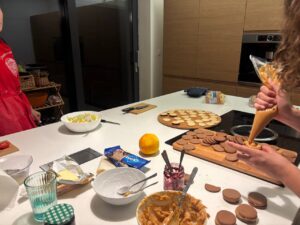
Durante esa semana realizamos varias actividades relacionadas con la Semana de la Lengua Española, que se celebraba en su instituto. El 8 de octubre estaba previsto un concurso de alfajores, unos dulces típicos de Argentina. Por eso, el día anterior, Tereza, sus amigas y yo estuvimos toda la tarde preparando este postre.
Tardamos bastante tiempo en hacerlos, pero el esfuerzo mereció la pena porque nos quedaron muy bien. Además, nos lo pasamos genial mientras los preparábamos.
Al día siguiente, presentamos nuestros alfajores en el concurso del instituto.
El instituto eslovaco (CARLA)
Durante las tres semanas que estuvimos en Eslovaquia, tuvimos la oportunidad de ser unos alumnos más en un instituto muy diferente al nuestro. Esto nos permitió observar las diferencias entre el sistema educativo eslovaco y el español.
Para empezar, los centros de educación secundaria de Eslovaquia se conocen como gymnázium. En ellos se cursan varios años de educación secundaria, por lo que no equivalen exactamente a la ESO española. Los alumnos suelen incorporarse a esta etapa entre los 14 y los 15 años. Además, la edad de los estudiantes de una misma clase puede variar, ya que el sistema de agrupación por año de nacimiento es diferente al español, donde el curso suele organizarse según el año natural.
Una de las cosas más parecidas a nuestro instituto era el horario, ya que las clases comenzaban normalmente a las 8:00 de la mañana y, por lo general, tenían siete clases durante la jornada. Sin embargo, también existían horarios que incluían una hora cero, que empezaba a las 7:00 de la mañana, y una octava hora que podía prolongarse hasta la tarde.
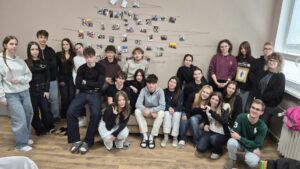
Entre clase y clase tenían descansos de entre 10 y 15 minutos. Durante ese tiempo podían comer, estudiar o incluso tumbarse en cualquiera de los sofás que había en los pasillos y en las propias aulas. Esto fue una de las cosas que más nos sorprendió. Además de que cada clase tenía su propio sofá, las aulas estaban decoradas con fotografías del grupo.
Otra de las cosas que mejoró nuestra experiencia fue que nos sentimos como unos alumnos más. Teníamos nuestra propia clase, la III.SA, con compañeros de nuestra edad que nos ayudaban mucho. También utilizábamos la aplicación del instituto, EduPage, para comunicarnos con los profesores, entregar los trabajos y consultar el menú del comedor, donde comíamos como la mayoría de los alumnos.
En conclusión, fue una experiencia muy divertida en la que aprendimos mucho sobre una nueva cultura y descubrimos cómo desenvolvernos de forma más autónoma en diferentes situaciones.
Comida típica (CARLA)
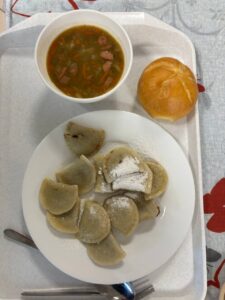
Bryndzové pirohy
Uno de los platos típicos que más nos gustaron y que tuvimos la oportunidad de probar fue el bryndzové pirohy. Son una especie de pequeñas empanadillas rellenas de patata y de bryndza, un queso de oveja típico de la zona.
Aunque es uno de los platos más representativos de Eslovaquia, nos dijeron que no lo suelen comer muy a menudo. Esto nos sorprendió bastante, ya que en España sí solemos comer nuestros platos tradicionales, como la tortilla de patata o la paella.
Actividades individuales que hice con Sofía (ADA)
3 de octubre
El 3 de octubre fui con toda la familia a visitar a la familia materna de Sofía, que vivía en un pueblo cercano. Comimos en casa de su abuela y después fuimos a una feria tradicional del pueblo, donde vendían comidas y dulces típicos de la zona.
Probé distintos dulces que, aunque tenían sabores diferentes a los que estoy acostumbrada, estaban riquísimos.
Por último, dimos un paseo con la familia y los perros junto a un lago precioso. Había gente bañándose y pescando, ya que hacía sol y no hacía demasiado frío.
7 de octubre
El 7 de octubre tuvimos que preparar unos alfajores en casa de una amiga de Sofía, porque al día siguiente se celebraba un concurso de estos dulces en el instituto.
La preparación fue un poco complicada porque Sofía es celíaca y tuvimos que tener mucho cuidado con los ingredientes para evitar el gluten y la contaminación cruzada. Aun así, nos quedaron muy bien. Aunque no ganamos el concurso, pudimos probar los alfajores de los demás participantes, que estaban fantásticos.
Actividades que hicimos juntos (ADA)
1 de octubre
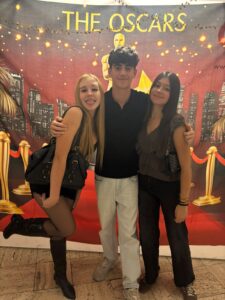
El 1 de octubre, desde el instituto organizaron la fiesta anual en la que los alumnos de primero preparan una coreografía como forma de bienvenida.
Al principio, se interpretan tres coreografías antes de poner la música. Después, se van haciendo pausas para representar las demás coreografías, hasta que la última pausa se dedica a un sorteo.
La música era bastante variada e incluso pusieron un par de canciones en español. Aun así, la mayoría estaban en eslovaco, así que no pudimos entender bien sus letras.
A pesar de ello, nos lo pasamos muy bien y varios chicos de nuestra clase bailaron con nosotros.
10 de octubre
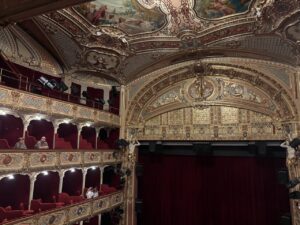
El 10 de octubre fuimos al teatro a ver Carmen, una obra de ballet basada en una historia española.
Tuvimos que vestirnos de manera elegante porque, de lo contrario, no nos dejaban entrar. La obra duró aproximadamente una hora y la disfrutamos mucho. Los bailarines lo hicieron genial y transmitieron muchos sentimientos a través de sus movimientos.
Después de la función, fuimos a cenar a un restaurante italiano bastante popular de Košice.
11 de octubre
El 11 de octubre tuvimos que madrugar para visitar una montaña que estaba bastante lejos de la ciudad. Allí había una gran diferencia de temperatura respecto a Košice, por lo que tuvimos que pedir ropa de abrigo a nuestras familias para no pasar demasiado frío.
Subimos en telesilla hasta casi la cima de la montaña. Desafortunadamente, fuimos un día en el que había mucha niebla y no pudimos admirar el paisaje que nos habían descrito.
Durante el verano, se puede contemplar un lago al que la gente va a bañarse y a pasar el día. Además, en la zona habitan numerosas especies de aves muy bonitas.
Comida típica (ADA)
Bryndzové halušky
Uno de los platos típicos que probé en Eslovaquia fue el bryndzové halušky. Se trata de una especie de pequeños ñoquis elaborados con patata, acompañados de bryndza, un queso de oveja típico del país, y un poco de beicon.
La primera vez que los probé fue en casa de la familia de Sofía, aunque más adelante también los comimos en un restaurante. Me gustaron mucho. Estoy acostumbrada a los quesos de sabor intenso, así que su sabor no me resultó demasiado fuerte. Sin embargo, según nos explicaron, a muchas personas de otros países no les gusta demasiado este plato debido a la intensidad del queso.
Actividades que hice con Richard (JUAN)
Durante las tres semanas que estuvimos en Eslovaquia, hicimos bastantes actividades. Estas son algunas de las más destacadas.
3 de octubre
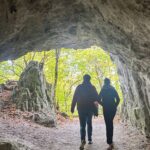
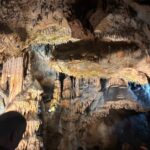
Ese día nos levantamos pronto y fuimos a visitar unas cuevas subterráneas con una visita guiada.
La cueva era muy grande y sus paredes estaban llenas de estalactitas, lo que hacía que la visita fuera especialmente bonita e interesante.
Después de pasar por casa, nos preparamos para ir a ver un partido de hockey sobre hielo, un deporte muy popular en Eslovaquia y en otros países del norte de Europa. Allí tienen mucha afición por este deporte y los equipos juegan a un gran nivel.
El partido estuvo muy emocionante y el ambiente era increíble, ya que el público no paraba de animar a su equipo. Finalmente, el equipo de Košice se llevó la victoria.
Diferencias culturales (JUAN)
Eslovaquia es un país bastante diferente de España, y esto se refleja en varios aspectos de la vida cotidiana.
Por ejemplo, los horarios son muy distintos. En Eslovaquia, las comidas principales suelen hacerse unas horas antes que en España y muchos negocios cierran más temprano. En general, la rutina diaria está organizada para acostarse antes y madrugar más.
Otro aspecto interesante es la forma de relacionarse. Por lo que pude observar, la gente me pareció algo más reservada que en España. Creo que las diferencias culturales y las costumbres de cada país influyen en esta manera de relacionarse. Además, en España las fiestas y otros eventos sociales suelen estar más presentes en la vida cotidiana.
En definitiva, son dos culturas diferentes, pero ha sido muy interesante acostumbrarnos a la forma de vida de otro país y seguir sus costumbres durante tres semanas. ¡Ha sido una experiencia que recordaremos durante mucho tiempo!
Comida típica (JUAN)
Langoš
La comida eslovaca era diferente de la española, pero, en general, nos gustó bastante. Un día probé una masa de pan muy curiosa llamada langoš.
Our Erasmus Diary: Three Weeks in Slovakia
Authors: Carla Victoriano, Ada Mayoral and Juan Llorente (1st year of Bachillerato).
For three weeks, we took part in an Erasmus exchange in Košice, a city in eastern Slovakia. During our stay, we lived with Slovak host families, attended classes at a local secondary school and discovered new customs, traditions and traditional dishes.
Individual Activities I Did with Tereza (CARLA)
October 3rd
My first Saturday in Slovakia coincided with an important race held in Košice called the Peace Marathon. This marathon has been held since 1924 without missing a single year.
When I was told that we were going to attend, I had no idea how important this event was. However, when we arrived at the venue in the city centre, I was surprised by the lively atmosphere and the large number of participants. All along the route, there were huge crowds cheering on the runners and hundreds of families taking part together.
However, Saturday’s race was a family event, as the main race was scheduled for the following day, Sunday, October 4th. We went to watch that race too because Tereza’s mother was taking part alongside more than three thousand other runners.
October 7th
During that week, we took part in several activities because the school was celebrating Spanish Language Week. On October 8th, there was an alfajor competition. Alfajores are traditional Argentinean sweets. Therefore, the day before, on October 7th, Tereza, her friends and I spent the whole afternoon preparing them.
It took us quite a long time to make them, but it was worth the effort because they turned out really well. We also had a great time making them together.
The following day, we entered our alfajores in the school competition.
The Slovak School (CARLA)
During our three weeks in Slovakia, we had the opportunity to experience what it was like to be regular students at a school that was very different from ours. This allowed us to observe the differences between the Slovak and Spanish education systems.
To begin with, Slovak secondary schools of this type are called gymnázium. Students usually start this stage of education between the ages of 14 and 15. However, the education system is not exactly the same as the Spanish one, and students’ ages can vary within the same class because the rules for grouping students by birth year are different.
One of the things that was most similar to our school was the timetable. Classes usually started at 8:00 a.m., and students generally had seven lessons during the school day. However, there were also timetables that included a zero period, which started at 7:00 a.m., and an eighth period that could continue into the afternoon.
Between lessons, students had breaks of 10 to 15 minutes. During these breaks, they could eat, study or even lie down on any of the sofas in the corridors or classrooms. This was one of the things that surprised us the most. Not only did every classroom have its own sofa, but the rooms were also decorated with photographs of the class.
Another thing that made our experience even better was that we felt like regular students. We had our own class, III.SA, and our classmates were very helpful. We also used the school’s app, EduPage, to communicate with teachers, hand in assignments and check the school lunch menu. We ate in the school canteen, just like most of the other students.
In conclusion, it was a very enjoyable experience in which we learned a lot about a new culture and discovered how to become more independent and deal with different situations on our own.
Traditional Food (CARLA)
Bryndzové pirohy
One of the traditional dishes we enjoyed the most was bryndzové pirohy. They are small dumplings similar to little pasties, filled with potatoes and bryndza, a traditional sheep’s cheese from the region.
Although it is one of Slovakia’s most representative dishes, we were told that people do not eat it very often. This surprised us because, in Spain, we often eat our traditional dishes, such as Spanish omelette or paella.
Individual Activities I Did with Sofía (ADA)
October 3rd
On October 3rd, I went with Sofía’s whole family to visit her mother’s side of the family in a nearby village. We had lunch at Sofía’s grandmother’s house and then went to a traditional village fair, where people were selling local food and sweets.
I tried several different sweets. Although their flavours were different from what I was used to, they were delicious.
Finally, we went for a walk with the family and their dogs beside a beautiful nearby lake. Some people were swimming and fishing because it was sunny and not too cold.
October 7th
On October 7th, we had to make alfajores at one of Sofía’s friends’ houses because there was a school competition the following day.
Preparing them was a little complicated because Sofía has coeliac disease, so we had to be very careful with the ingredients to avoid gluten and cross-contamination. Nevertheless, they turned out really well. Although we did not win the competition, we were able to try the other participants’ alfajores, which were fantastic.
Activities We Did Together (ADA)
October 1st
On October 1st, the school organised its annual party, where first-year students prepare a dance routine as a way of welcoming everyone.
First, three dance routines are performed before the music starts. After that, there are breaks between the remaining performances, and the final break is dedicated to a raffle.
The music was quite varied, and they even played a couple of songs in Spanish. However, most of the songs were in Slovak, so we could not understand the lyrics very well.
Despite this, we had a great time, and several boys from our class danced with us.
October 10th
On October 10th, we went to the theatre to see Carmen, a ballet based on a Spanish story.
We had to dress elegantly because otherwise we would not have been allowed inside. The performance lasted about an hour, and we really enjoyed it. The dancers performed brilliantly and conveyed a lot of emotion through their movements.
After the performance, we went to have dinner at a very popular Italian restaurant in Košice.
October 11th
On October 11th, we had to get up early to visit a mountain quite far from the city. The temperature there was much lower than in Košice, so we had to ask our host families for extra warm clothes to avoid getting too cold.
We took a chairlift almost to the top of the mountain. Unfortunately, it was very foggy that day, so we could not enjoy the scenery we had been told about.
During the summer, visitors can admire a lake where people go swimming and spend the day. There are also many beautiful bird species living in the area.
Traditional Food (ADA)
Bryndzové halušky
One of the traditional Slovak dishes I tried was bryndzové halušky. They are small potato dumplings served with bryndza, a traditional sheep’s cheese, and a little bacon.
The first time I tried them was at Sofía’s family’s house, but we also ate them at a restaurant later on. I really liked them. I am used to strong cheeses, so their flavour did not seem too intense to me. However, we were told that many people from other countries do not particularly like this dish because the cheese has a very strong flavour.
Activities I Did with Richard (JUAN)
During our three weeks in Slovakia, we did lots of activities. These were some of the most memorable ones.
October 3rd
That day, we got up early and went to visit some underground caves on a guided tour.
The cave was very large, and its walls were covered with stalactites, which made the visit especially beautiful and interesting.
After going home, we got ready to watch an ice hockey match. Ice hockey is very popular in Slovakia and other northern European countries, and the teams play at a high level.
The match was very exciting, and the atmosphere was amazing because the fans never stopped cheering for their team. In the end, the Košice team won the match.
Cultural Differences (JUAN)
Slovakia is quite different from Spain, and this can be seen in several aspects of everyday life.
For example, meal times are very different. In Slovakia, people usually eat their main meals a few hours earlier than in Spain, and many shops and businesses close earlier. In general, daily routines are organised around going to bed earlier and getting up sooner.
Another interesting aspect is the way people interact with each other. From what I observed, people seemed a little more reserved than in Spain. I think cultural differences and the customs of each country influence the way people socialise. In addition, parties and other social events tend to be more common in everyday life in Spain.
In conclusion, the two cultures are different, but it was very interesting to get used to another country’s way of life and follow its customs for three weeks. It has been an experience we will remember for a long time!
Traditional Food (JUAN)
Langoš
Although Slovak food was different from Spanish food, we generally enjoyed it. One day, I tried a very unusual type of fried bread called langoš.